Birthe Piontek

birthe-idea-of-the-north.jpg

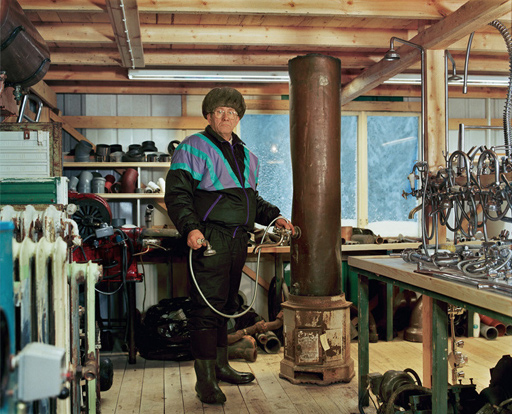
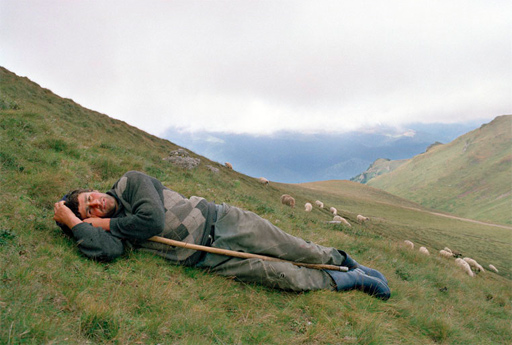
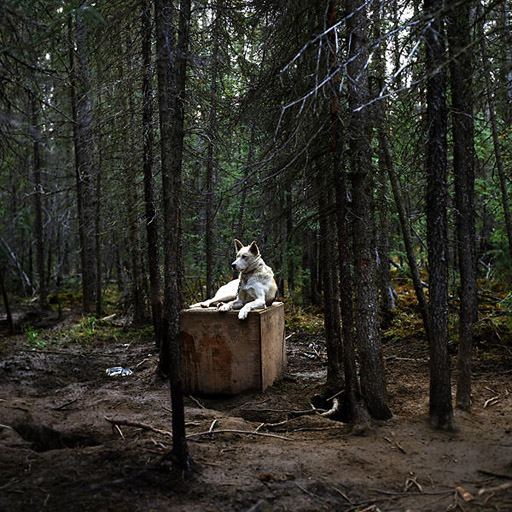
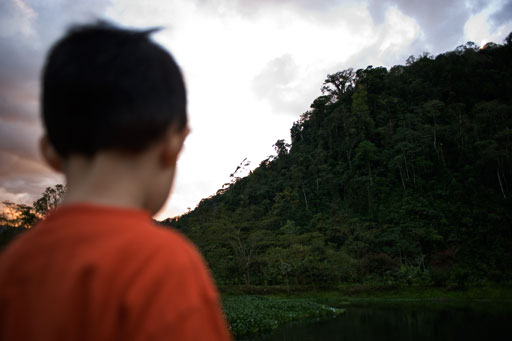
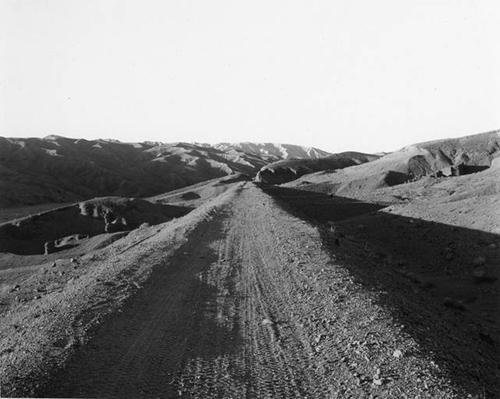
I've been a big fan of Birthe Piontek the photographer and the person since seeing her work a few years ago at Review Santa Fe. She's just released a new project titled The Idea of the North, full compelling environmental portraits and quietly emotional landscapes.

The project was shot over three months in a small community in the Yukon, Piontek writes:

I experienced first hand the mystery and fascination of life above the 60th parallel, and met people who came here as part of their quest for the idea of North.

I’m not the first observer to be simultaneously intrigued, yet remain a visitor. Glenn Gould, whose work inspired the title, wrote after visiting the North briefly, "I've read about it, written about it, and even pulled up my parka once and gone there. Yet like all but a few Canadians I've had no real experience of the North. I've remained, of necessity, an outsider. And the North remained for me, a convenient place to dream about, spin tales about,” and in the end, return South.

3 Stories about Rocks

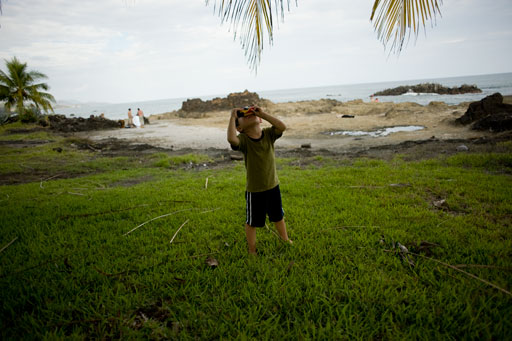
For the last few weeks, the conversation I have with Gabriel (who turned 2 on Sunday) at bedtime goes like this:

Me: "What kind of story do you want tonight?'

Gabriel: "Rock story."

So I tell a story about a rock. If I try to tell a story twice I invariably hear the demand, "new one".

Anyway here are 3 new stories about rocks... more on the way...

THE LONELY ROCK

Once there was a rock.

As far as the rock knew, it was alone in the world — one rock sitting quietly by itself on a grassy field that spread out as far as the eye can see. But this rock had no eyes and it saw nothing, so it did the only thing it knew how to do, it rolled. It rolled through days and nights and rain and fog until it bumped up against another rock.

The two rocks enjoyed one other's company so there they stayed until they were bumped by a third rock and three was even nicer than two so they cuddled up for a very long time until along came another, and maybe a year later another, and another, and so on. After a more days than even I know how to count, where there had once been one rock in a field, there was now a great pile of rocks. Birds came and made their nests on the pile and grass grew up around the edges and the rocks forgot they were rocks and today they speak with one voice when they bother to speak at all, because they are happy bunch, happy to have found one another in such a wide world, happy to have found their place. And today they call themselves a mountain.

--

Continue reading "3 Stories about Rocks" →

Ellen Carey

EllenCarey.jpg


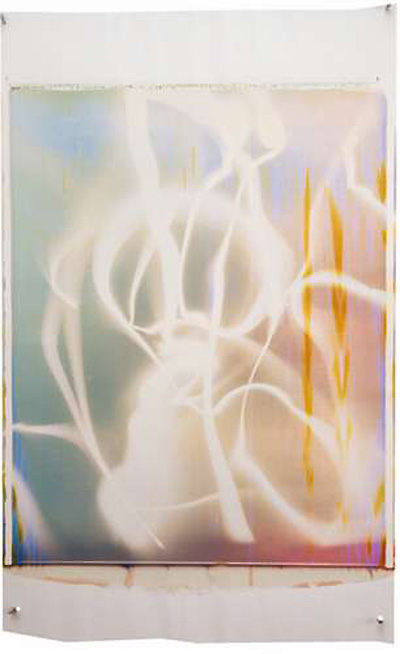
While I rarely link to purely abstract photography, I appreciate the difficulty of creating abstract images. In many ways, especially in photography, creating meaningful abstraction (minimalism also), is a more difficult than creating traditional images.

I recently saw one of Ellen Carey's "Polaroid Pulls" and was struck by her work's lushness, resonance (her process echos some of the very first experiments in photography) and irony (especially now that Polaroid is fading out of existence and chemistry is being replaced with pixels and bits).

Links: A nice online exhibition of Carey's work., Carey's Website,

Li Wei

liwei.jpg

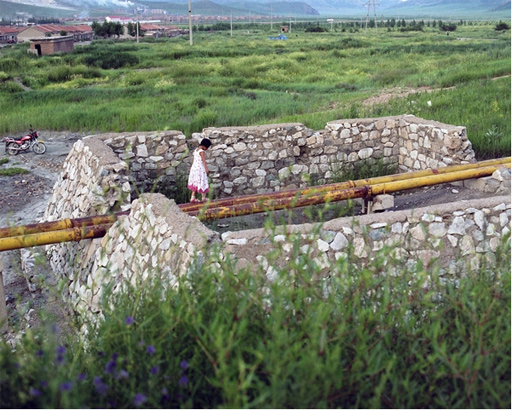
Li Wei is a Chinese photographer born in Inner Mongolia (part of China). He documents the region of his birth in a project titled simply The Earth. I've travelled through the region several times and have a great affection for the harsh emptiness of the land and the warmth of the people. His photos bring some of that back to me.

Rusyns - Lost Homes

rusyns.jpg


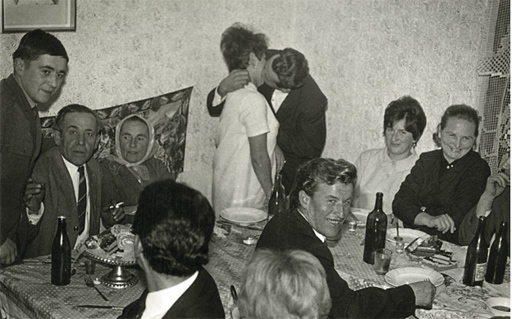
I know I'm late to the game in pointing out a project by Lucia Nimcová titled Rusyns: Lost Homes which documents an obscure Slovakian minority who were displaced when a dam was built and their villages inundated, but it's nicely done project and worth checking out if you haven't seen it. I only wish there were more photographers and more connections between images/maps/audio etc....

Used Book Store

usedbookstore.jpg


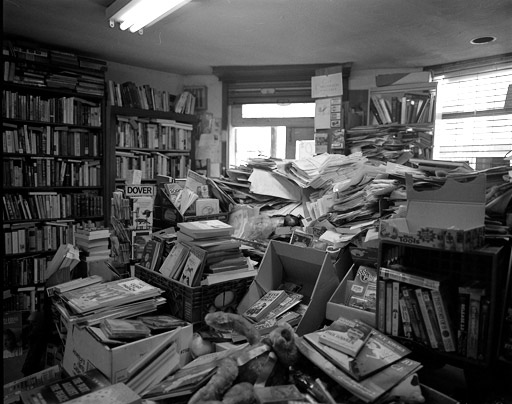
I love used book stores, but
there is always that forlorn melancholy
Of knowing that one day your copies
of Arabia Deserta, Stock Photographs: The Fort Worth Fat Stock Show and Rodeo, and
The Voyage of the Beagle,
will one day be jumbled amongst
someone else's cook books, Judy Blume,
and, God forbid, self help literature.

So I write notes in the margins.
I hide pictures between pages.

If I'm feeling magnanimous, I'll tuck a dollar near the good part of the story.

Sometimes I circle words leaving secret messages.

I see these things as little whispers
to the people of the future.
I want to let them know that
that these books too once had other lives.

Mark Ruwedel

westwardcourse.jpg


It would be hard not for me to love Mark Ruwedel's evocatively titled new show Westward the Course of Empire in which Ruwedel photographed the sites of abandoned railway lines in the American and Canadian West. It opens tomorrow at the Yossi Milo Gallery. This new series jibes nicely with Ruwedel's Earthworks portfolio in which he documented the mark of man on the earth (shooting burial mounds, old footpaths, earth art etc), and the effect of time on those marks.

Joe Ades, RIP

joe-ades.jpg

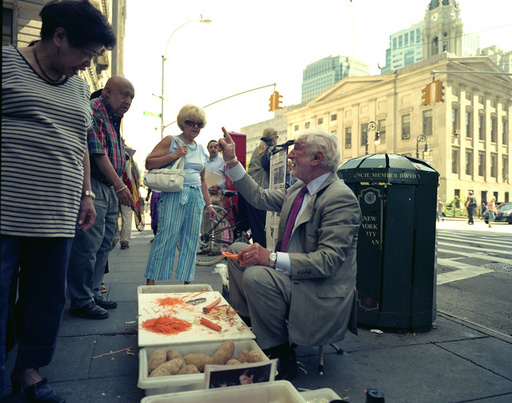
This is Mr. Ades here in Brooklyn a few months ago. He was always up for a chat about his business, his life, or the things he saw on the street. But the minute customers would show up, it was back to work. I last saw him about a week on a very cold day, occupying his regular spot in Union Square, making sales.

NYTimes Article, The Vanity Fair Article, David Galbraith's De-mythologizing Eulogy (via kottke), photos

Thobias Fäldt

m1.jpg

Some photographers have stories to tell, some find stories to tell, and some, I think, have internal compasses that are a few degrees off the norm, and are able to create stories, or at least the beginnings of stories, wherever they point their cameras, suggesting narratives, but never finishing them. Thobias Fäldt, a Swedish photographer, is in that last category. His images might not hold together as projects but individually all invite questions and are recognizable as the work an appealing, often humorous, off kilter vision. Fäldt's website is maddeningly obtuse, but contains many gems like the image above, titled White Visitor.

Are you Arabic?

Twenty two years ago I was sitting in an empty dining car on a train from Princeton, New Jersey to Washington D.C., when a girl who I did not know slid into the seat across the table from me. I thought she must have mistaken me for a friend by the familiar way she bounded over. She was a few years older than me, preppy, and carried a copy of the New Yorker magazine with a man walking his dog in the snow on the cover. She smelled of vanilla. It was twilight out, a heavy snow was falling, and without looking at me she said, "I hate snow," to which I eventually answered, "Oh... How sad." She turned from the window looking at me carefully, pursed her lips, and began reading her magazine. I continued looking out the window. We sat there in silence for the good part of an hour and then she abruptly rose and said, "You will remember me," and left. I never saw her again.

I remember the sound of the train, the snow swirling by, and the color of the sky which turned from lapis to midnight. I remember I was wearing a plaid shirt with a missing button under my father's overcoat and I remember in my pocket I was carrying a polaroid picture of a lady in black carrying a black umbrella in the snow. I remember the blackwatch scarf the girl wore draped around her neck, cashmere probably, and I remember that smell of vanilla, but I couldn't tell you a single thing about her face, her voice, or even the color of her hair. So, if by some strange fate, you happen to read this girl on the train: "No. It turns out I haven't remembered you, you have flickered away."

Tomokyo Yoneda

tomoko.jpg


Tomoko Yoneda is a Japanese photographer based in London whose books I've been studying lately. I'm intrigued by her quiet photos that reveal histories hidden in plain sight. In one portfolio she shoots the locations of foreign spy rendezvous, in another she documents the indirect impressions we make on houses (discolorations from radiator heat for example), and in another she photographs banal landscapes that were the scenes of battles and historical events (a pretty sea view at night turns out to be the location where Dr. Mengele drown himself for example). Her portfolios are little puzzle poems, and reminders that we are all surrounded by ghosts.

More on Yoneda: Deutsche Bank Art Magazine, Japan Times

Jan 20th, 2009

rachelfeierman09.jpg


I was looking around for a picture that summarized the inauguration for me when as if by telekinesis I received an email from photographer Rachel Feierman with the above image attached. I hope she posts more from the inauguration in her Politics series...

Related: Rachel Hope Feierman

Inaugural Addresses Past

kennedyinauguration2.jpg

Here are the full texts of all the inaugural addresses past.

And a few snippets that stuck out for me (in no particular order):

Lyndon Johnson:

"My fellow countrymen, on this occasion, the oath I have taken before you and before God is not mine alone, but ours together. We are one nation and one people. Our fate as a nation and our future as a people rest not upon one citizen, but upon all citizens.

This is the majesty and the meaning of this moment.

For every generation, there is a destiny. For some, history decides. For this generation, the choice must be our own.

Even now, a rocket moves toward Mars. It reminds us that the world will not be the same for our children, or even for ourselves in a short span of years. The next man to stand here will look out on a scene different from our own, because ours is a time of change—rapid and fantastic change bearing the secrets of nature, multiplying the nations, placing in uncertain hands new weapons for mastery and destruction, shaking old values, and uprooting old ways.

Our destiny in the midst of change will rest on the unchanged character of our people, and on their faith." (video)

Teddy Roosevelt:

" Yet, after all, though the problems are new, though the tasks set before us differ from the tasks set before our fathers who founded and preserved this Republic, the spirit in which these tasks must be undertaken and these problems faced, if our duty is to be well done, remains essentially unchanged. We know that self-government is difficult. We know that no people needs such high traits of character as that people which seeks to govern its affairs aright through the freely expressed will of the freemen who compose it. But we have faith that we shall not prove false to the memories of the men of the mighty past. They did their work, they left us the splendid heritage we now enjoy. We in our turn have an assured confidence that we shall be able to leave this heritage unwasted and enlarged to our children and our children's children. To do so we must show, not merely in great crises, but in the everyday affairs of life, the qualities of practical intelligence, of courage, of hardihood, and endurance, and above all the power of devotion to a lofty ideal, which made great the men who founded this Republic in the days of Washington, which made great the men who preserved this Republic in the days of Abraham Lincoln."

Woodrow Wilson

We are provincials no longer. The tragic events of the thirty months of vital turmoil through which we have just passed have made us citizens of the world. There can be no turning back. Our own fortunes as a nation are involved whether we would have it so or not.

And yet we are not the less Americans on that account. We shall be the more American if we but remain true to the principles in which we have been bred. They are not the principles of a province or of a single continent. We have known and boasted all along that they were the principles of a liberated mankind. These, therefore, are the things we shall stand for, whether in war or in peace.

Harry Truman

The American people stand firm in the faith which has inspired this Nation from the beginning. We believe that all men have a right to equal justice under law and equal opportunity to share in the common good. We believe that all men have the right to freedom of thought and expression. We believe that all men are created equal because they are created in the image of God.

From this faith we will not be moved.

(Partial Speech - mp3)

Howard Taft


The negroes are now Americans. Their ancestors came here years ago against their will, and this is their only country and their only flag. They have shown themselves anxious to live for it and to die for it. Encountering the race feeling against them, subjected at times to cruel injustice growing out of it, they may well have our profound sympathy and aid in the struggle they are making. We are charged with the sacred duty of making their path as smooth and easy as we can. Any recognition of their distinguished men, any appointment to office from among their number, is properly taken as an encouragement and an appreciation of their progress, and this just policy should be pursued when suitable occasion offers.

Grover Cleveland

Care for the property of the nation and for the needs of future settlers requires that the public domain should be protected from purloining schemes and unlawful occupation.

The conscience of the people demands that the Indians within our boundaries shall be fairly and honestly treated as wards of the Government and their education and civilization promoted with a view to their ultimate citizenship, and that polygamy in the Territories, destructive of the family relation and offensive to the moral sense of the civilized world, shall be repressed.

The laws should be rigidly enforced which prohibit the immigration of a servile class to compete with American labor, with no intention of acquiring citizenship, and bringing with them and retaining habits and customs repugnant to our civilization.

John F Kennedy (full speech) (mp3)

Dwight D. Eisenhower (full speech)

FDR's First Innagural (mp3)

John Adams

There may be little solidity in an ancient idea that congregations of men into cities and nations are the most pleasing objects in the sight of superior intelligences, but this is very certain, that to a benevolent human mind there can be no spectacle presented by any nation more pleasing, more noble, majestic, or august, than an assembly like that which has so often been seen in this and the other Chamber of Congress, of a Government in which the Executive authority, as well as that of all the branches of the Legislature, are exercised by citizens selected at regular periods by their neighbors to make and execute laws for the general good. Can anything essential, anything more than mere ornament and decoration, be added to this by robes and diamonds? Can authority be more amiable and respectable when it descends from accidents or institutions established in remote antiquity than when it springs fresh from the hearts and judgments of an honest and enlightened people? For it is the people only that are represented. It is their power and majesty that is reflected, and only for their good, in every legitimate government, under whatever form it may appear. The existence of such a government as ours for any length of time is a full proof of a general dissemination of knowledge and virtue throughout the whole body of the people. And what object or consideration more pleasing than this can be presented to the human mind? If national pride is ever justifiable or excusable it is when it springs, not from power or riches, grandeur or glory, but from conviction of national innocence, information, and benevolence.

Archive

1999 — 2026
2026
Jan Mar Apr May Jun
2025
May Jun Oct
2024
2023
2022
2021
Jan
2020
Mar Apr May Jun Jul Oct Dec
2019
Jan
2018
Apr
2017
Oct Nov
2016
Mar
2015
Dec
2014
Oct
2013
Mar Apr May
2012
Jan Feb Mar May Jun Jul Aug Sep Oct
2004
Mar Jul Aug Sep Oct Nov Dec
2003
Mar Apr
2002
2001
2000
1999
May