
Barb
Dragoon
English Carrier
French Bagdad
Polish Cere Pigeon
Scandaroon
Spanish Barb
Steinhiem Bagdad
Origami Math
The Man without Fingernails
Sushi in School
At School We Need a Robotics Class
Deadly Kitties
Diseases
Every Kid Should Have A Ball
Stop Wars
Mutations and the Disabled
Freedom for All People (Stop Racist People)
Recipe for Alien Soup
Pelican Jokes
What if I was a Penguin
Death Poem
My Little Owl Friend
Describe Your Shoe
Poseidon, Zeus, Hermes, Achilles, and Hercules (My Hermit Crabs): If they could speak
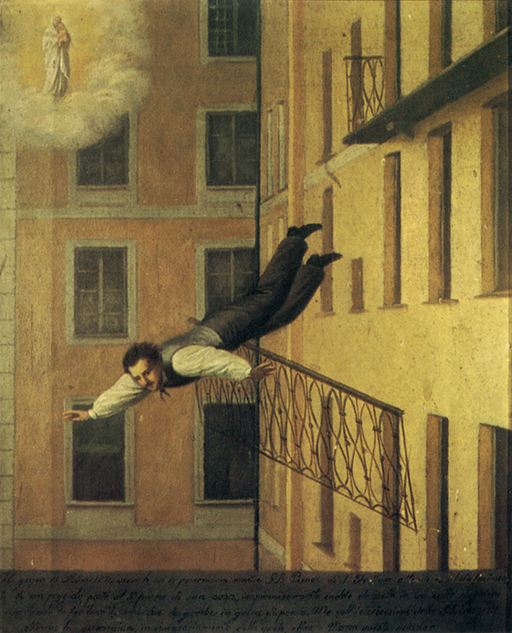
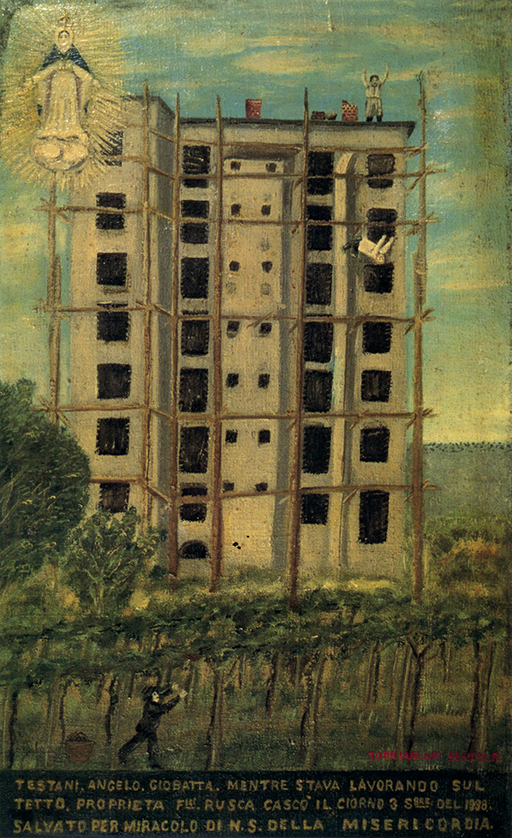
I have loved ex-votos ever since I spotted a small cluster of them in the back of my abuelita's church. I was immediately fascinated with their strangeness and power. As soon as I had a paycheck I started collecting them and have studied the Mexican forms of this art in detail. That said, I've only been vaguely aware of the European ex-voto traditions that inspired the Mexican tradition. A blog called Chaudron has collected a fantastic set of Italian ex-votos of people falling (who were presumably miraculously saved).
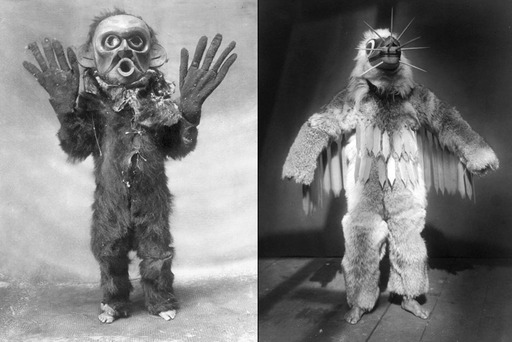
The Atlantic's InFocus blog features a set of extraordinary portraits of Native Americans. Many of images remind me of the faces, hairstyles, and ceremonial costumes of people I encountered in the far corners of Tibet in the late 90s.
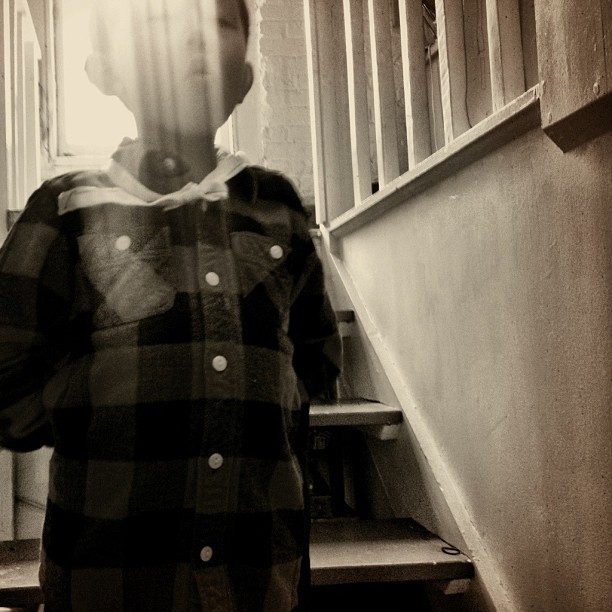
Photographer Ramsay de Give and editor/producer Kristen Joy Watts have a lovely project in The Weight of Objects which pairs portraits with pictures of treasured objects and text. We were lucky to have the kids photographed for this a few weeks ago. The Weight of Objects also features a super instagram feed that teases upcoming photos.

Found in the trash:
The second presidential debate will be contested tonight. Included are links to historical presidential debates past as well as old ads/speeches for years with no debates. My favorite link is one of a Democratic Ronald Reagan campaigning for Truman.
2012 Obama / Romney 1
2008 Obama / McCain 1, Obama / McCain 2, Obama / McCain 3
2004 Bush / Kerry 1 (Pt 1) Bush / Kerry 1 (Pt 2) Bush / Kerry 1 (Pt 3) etc.
2000 Bush / Gore (Pt 1.), Bush / Gore (Pt 2.), Bush / Gore (Pt 3.), Bush / Gore (Pt 4.), Bush / Gore (Pt 5.), Bush / Gore (Pt 6.), Bush / Gore (Pt 7.)
1996 Clinton / Dole 1, Clinton / Dole 2
1992 Clinton / G W H Bush / Ross Perot
1988 Bush / Dukakis
1984 Reagan / Mondale
1980 Reagan / Carter
1976 Carter / Ford 3
1972 Nixon / McGovern (no debate)
1968 Nixon / Wallace /Humphrey (no debate)
1964 Johnson / Goldwater (no debate)
1960 Kennedy / Nixon
1956 Eisenhower / Stevenson (no debate)
1952 Eisenhower / Stevenson (no debate)
1948 Truman / Dewey (no debate)
1944 Roosevelt / Dewey (no debate)
1940 Roosevelt / Wendell Wilkie (no debate)
1936 Roosevelt / Landon (no debate)
1932 Roosevelt / Hoover (no debate)
1928 Hoover / Smith (no debate)
. . . . . . . . . .
Semi related: Eisenhower in Color, Inaugural Addresses Past, Abe Lincoln in Person, Teddy Roosevelt Recording
Gabriel: "At the end of the rainbow is an everything tree. It can make whatever you want. Cherries... Toys... Even little dogs... Just everything"
Me: "What does it look like?"
Gabriel: "You can't see it, that's why it's at the end of the rainbow. You can never find it."
Me: "Can you draw it?"
Gabriel: "I can draw it. Maybe you can. Maybe. I don't know, but most people can't."
Me: "Why?"
Gabriel: "You know why... people get dusty in their mind."
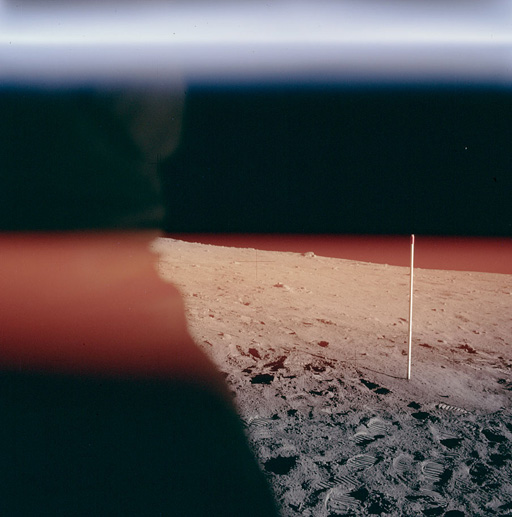
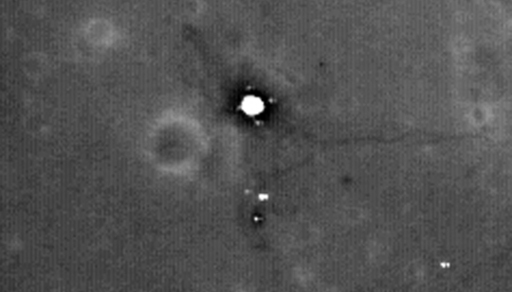
Somewhere deep in a storage unit in Texas sits a signed photograph of Neil Armstrong, beneath it you will find a short handwritten letter from him addressed to me.
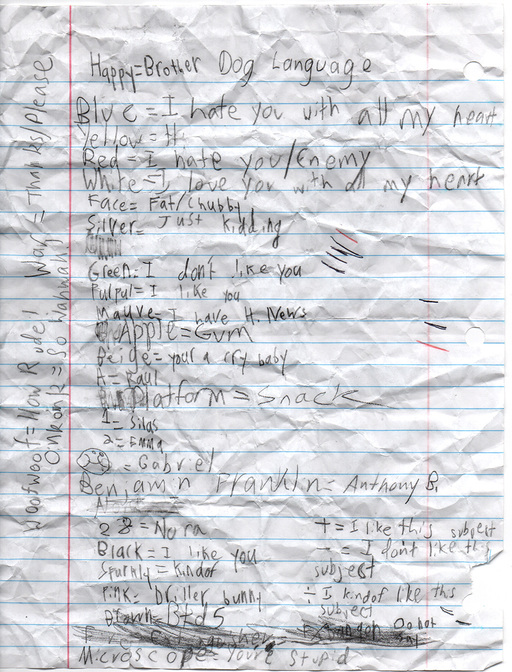
I spent my 6th grade summer biking to the library, going through Who's Who in America and writing anyone I thought famous. Most of my letters were simple and gushing (this is a draft of a letter I wrote to Dr. J). But my letters to astronauts were different. I was a space geek. A file cabinet in my bedroom bulged with pages cut from magazines and newspapers: Venera 9, Venera 10, Apollo-Soyuz, Viking, Luna 24, Voyager, Pioneer etc., were all neatly cataloged and categorized. A set of 4x6 note cards detailed all the major known objects in the solar system with a drawing of each. I had several bookshelves devoted to space literature was an avid model rocketeer. Tom Wolfe's The Right Stuff had been released in January of that year. I devoured it. Worship was too small a word for what I felt about the Mercury, Gemini, and Apollo astronauts. I didn't understand why Apollo had ended. Why weren't we still pushing humans deeper into the void?
The plans for the Space Shuttle (which hadn't launched yet) seemed absurd to me. I wondered, "why build a space plane when Mars beckons?" I poured all these thoughts into my astronaut fan letters. Many sent letters, but Armstrong's was memorable. It was short and simple. He told me he wouldn't have gotten to the moon if he hadn't been an engineer and that he didn't do it alone. He advised me to learn to use a slide rule, to think through problems, and to work hard. He told me to never stop looking up at the sky and imagining what was up there.
This week I've read every Armstrong obituary I've come across. Characteristically, The Economist published one of the best. They dug up this quote:
Armstrong offered the following self-portrait: “I am, and ever will be, a white-socks, pocket-protector, nerdy engineer, born under the second law of thermodynamics, steeped in steam tables, in love with free-body diagrams, transformed by Laplace and propelled by compressible flow.”
I didn't expect to be surprised anything I read this week about Armstrong and his two hours and thirteen minutes on the moon, but several little details reported in the Armstrong tribute/news river were new to me. I had not known his iconic portrait of Buzz Aldrin was doctored by NASA to correct for a bad crop and that there were few pictures of Armstrong actually on the moon. I recommend paging through the 122 shots in the unedited archive of all 122 images taken during that first moonwalk. The mistakes and the pictures normally edited out somehow bring the archive to life. They also made me wonder, did they pause at the hatch on the way back in and take one last look. What did it sound like in those suits?
A college friend's mom was a beauty queen who escorted astronauts around San Juan on their post-landing worldwide triumphal journey. She noted that the NASA guys partied hard— harder even than the Beatles who she also guided around the city, but not Armstrong, "He was cool. You hardly knew he was there."
It is easy to be nostalgic about the idea of moon landing, about a night when the whole world was united. My mother painted a picture of suburban Houston where all the television sets were flickring in unison and the streets were empty. EB White describes a more distracted scene here in NY. But was it really worldwide? I've travelled to plenty of places where people have no idea we went up there.
No man born after 1935 has walked on the moon. In a few short years the last astronaut to holding those memories will be gone. The moment is already fading from our collective experience being relegated to a deeper past... easier to mythologize, but also easier to forget.
Lydia Netzer writes in the NYTimes:
Remember Plato’s allegory of the cave. In the cave, the people look at shadows moving on the wall. They watch the shadows move, and they think that’s living. What if they could go outside and see the sun? That’s us, moving from the Earth to the Moon. That’s Neil Armstrong, who died at the age of 82 over the weekend, standing on the Moon, and looking back at Earth.
The thing about the cave is, it’s not just one cave. It’s more caves, and more, all nested within one another. The Moon was our first cave; Mars will be next. And then there will be another cave, and another.
--
Related: Mexican Lullaby, La Luna, Wanderers, Luna Llena,
I have no idea how I stumbled onto the Photography Archives of the Evangelical Lutheran Church, but I can tell you they are rich, deep, occasionally odd and well worth the journey.
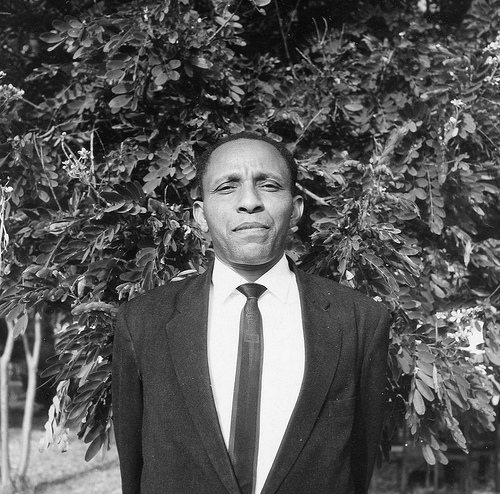
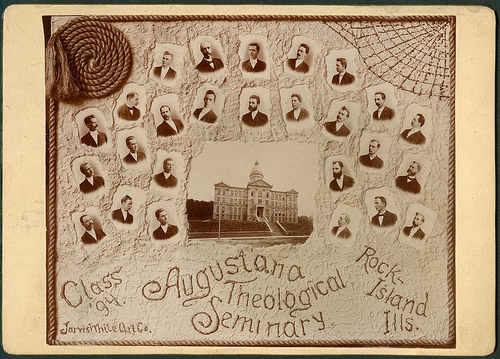
I have a soft spot for road trip photography that traces an emotional, historical, or personal journey. Melba Arellano's Carretera National project tracing the Acapulco-Zihuatanejo highway feels as if it was made just for me.