The thing about Salad Days
And Golden Ages
Is that you never know you're in them
Until years later
When their reflected glow is almost painful.
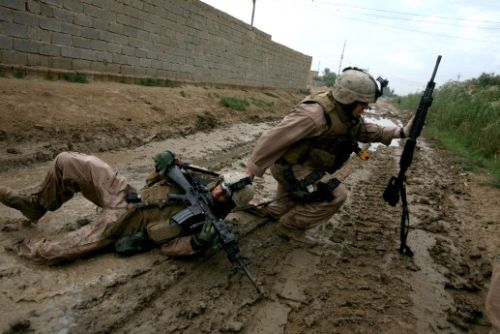
João Silva Injured


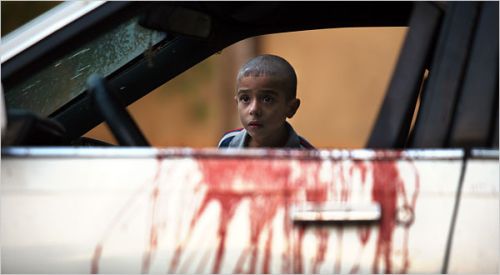
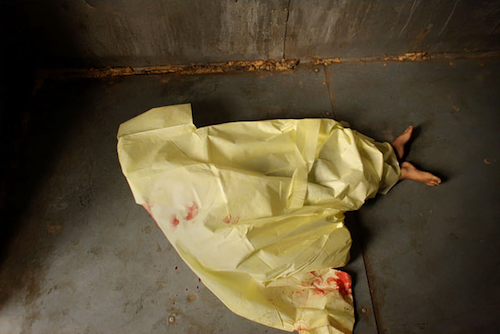
João Silva's photography is easy to spot in Times, it is almost always startling close to something terrible. Covering wars in Africa, The Balkans, Chechnya, Iraq, Pakistan, and Afghanistan he has seen more tragedy than most of us can imagine. Silva is also also a solid writer. The Bang-Bang Club: Snapshots from a Hidden War is a harrowing portrait of war in South Africa and In the Company of God is an intense portrait of Iraqi Shiites during the war.
The New York Times reports that João was seriously injured when he stepped on a mine Saturday in Kandahar province. He was evacuated to a military hospital. There has been no update on his condition.
Update: The Times reports Mr. Silva will lose his legs. Many testimonials and tributes can be found here.
NY Times on Colony Collapse Disorder
I suspect the NYTimes writer of this piece on the fascinating and disturbing phenomenon of honeybee colony collapse disorder was having a bit of fun w/ this one:
"One perverse twist of colony collapse that has compounded the difficulty of solving it is that the bees do not just die — they fly off in every direction from the hive, then die alone and dispersed. That makes large numbers of bee autopsies — and yes, entomologists actually do those — problematic."
"The first steps were awkward, partly because the Army lab was not used to testing bees, or more specifically, to extracting bee proteins. “I’m guessing it was January 2007, a meeting in Bethesda, we got a bag of bees and just started smashing them on the desk,” Charles Wick said. “It was very complicated.”
The process eventually was refined. A mortar and pestle worked better than the desktop, and a coffee grinder worked best of all for making good bee paste."
"Another possibility, he said, is a kind of insect insanity."
Cassandra Jones
I met several awesome artists today. One was Cassandra Jones who creates art from found photographs. She makes elaborate large-scale wallpaper from repeating pictures of cheerleaders, flamingos, lightning, etc., etc. and she he makes really super short video pieces. One of my favorites is above. What's not to love about a neo-Muybridge?
Sotheby's Photography Auction Catalog
Sometimes just to torture myself I'll browse the Sotheby's Auction Catalog (registration required)... painful, but fun.
I'm a sucker for any images from Sally Mann's Mother Land series:

This one is called Untitled (Deep South #9) and man would it look nice in the bedroom.
Don't know the series? Read these reviews/posts: Indy Week, Musings, Arts Central,
Secret Societies of the Morning F Train
Secret society of pretty girls who read Catcher in The Rye.
Secret society of guys who wear chicken shirts.
Secret society of vaguely familiar acquaintances.
Secret society of ladies who smell of butterfly milk.
Secret society of pretend sleepers.
Secret society of guys who carry briefcases but might be in metal bands.
Secret society of guys with beards who read Epictetus.
Secret society of quiet farters.
Secret society of contagious yawners.
Secret society of guys who nod to other guys even though they have no idea why they are nodding.
Secret society of artists who might be drawing you, but are actually drawing monsters.
Secret society of men who are probably pirates.
Secret society of humans from the future (this is how they study us).
Secret society of children (who are involved in too many secret societies to list in this forum).
Secret society of people who consciously make eye contact.
Secret society of people who studiously avoid eye contact(who by the way are involved in a fierce silent battle with the secret society listed above).
Secret society of people with broken hearts and other hidden wounds.
Secret society of listmakers who search out the invisible.
Liu XiaoFang

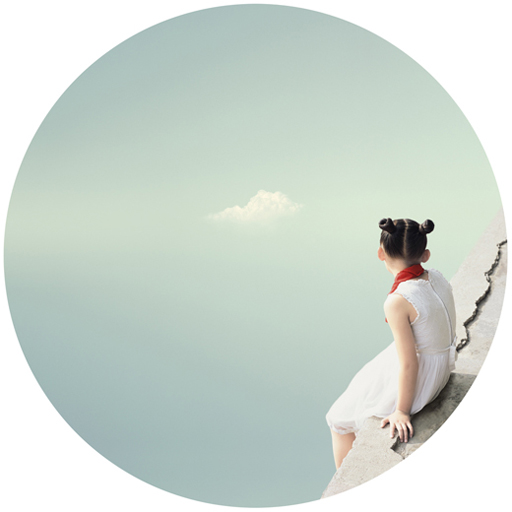
Liu XiaoFang's was one of the photographers chosen for reGeneration2, a selection of "50 photographers of tomorrow" curated by the Swiss Musée de lElysée. One of her images graces the cover of the Aperture foundation catalog of the exhibition. I don't know much about this photographer and have only seen her work online at the 789 Gallery. I was wondering if anyone out in internet world had a better link. I find the work striking but cold and would like a bit more context to see if it warms me up.
Robots
David Leventi

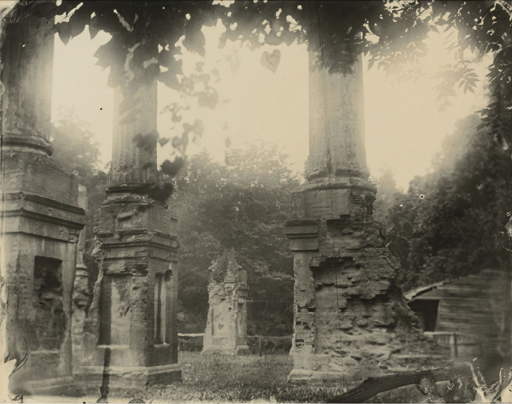
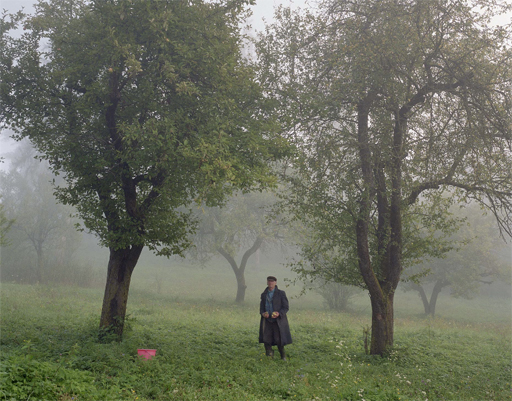
Someone mentioned David Leventi's photography of opera houses to me, so I looked up the site. The opera houses didn't do much for me (architectural photography rarely gets me out of bed), but I really enjoyed his portfolio of Romania images which he titles Romania Revisited. In his statement he writes,
"Romania Revisited retraces my great-grandfather’s footsteps into an unexpected past. Based on stories told by my father and grandmother, I traveled to Romania with a 4x5” large format view camera, collecting lost memories on a journey through a country now struggling to put behind it a lifespan of tyranny, while all the best and brightest who dared or were able to left."
Oscar Fernando Gomez

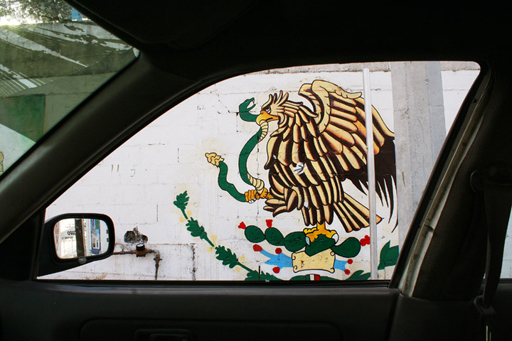
Oscar Fernado Gomez is a cab driver in Monterrey, Mexico. He shoots fast and raw with an eye for the absurd. I can't wait to see more. (via fotoregia)
Peter Garfield

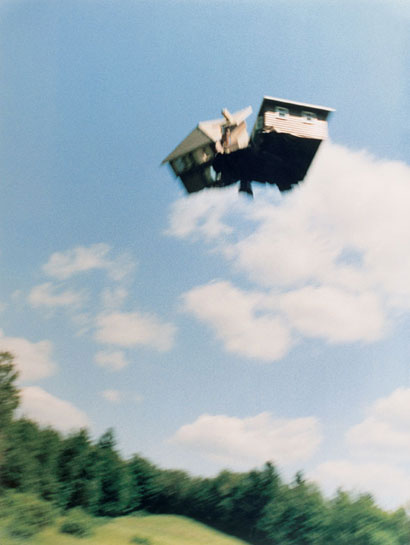
Every few years I find myself back at Peter Garfield's portfolio site admiring his Mobile Holmes project. It helps to know that no photoshop was involved, and also that it's not exactly what you think. (via William Lamson)
Miti Ruangkritya

Today all this has changed. Siem Reip, or rather the nearby ruins of Angkor Wat are on the global must-see tourist list. The population of the city has increased 20 fold and is circled by 5 star hotels filled with foreigners on package tours. Thai phtographer Miti Ruangkritya's project On the Edge views the city at a distance from the vantage point of someone approaching (or perhaps momentarily escaping) the city... The effect is a sort of a topsy turvy South East Asian version Tati's film Play Time, a film about Paris, but in which Paris is only seen in distant reflection. The pictures are both familiar and foreign, and loaded with a dusty melancholy of seeing the underbelly of an encroaching world. (via HHS)
On Aesthetics
There's a poem I come back to every few years titled 'On Aesthetics' by Kenneth Koch. It runs about 20 pages of the book One Train and it never fails to delight. I'm not much of a poetry guy, but I love this poem.
A tiny excerpt:
#44 AESTHETICS OF DANTEInvite your best friends
To go out with you in a boat
That's magic and can go anywhere
And sail and talk, and talk and sail,
Until you find Beatrice
Like an endangered species
With luminous antlers
Rising through the Medieval dark.
Catching Lightning Bugs in Halmoni's Backyard after the Wedding
Retratos Pintado

I'm excited about a show opening in a few weeks at Yossi Milo titled Retratos Pintados. It's an exhibit hand-painted Brazilian vernacular photographs from the collection of Titus Riedl. My grandparents in Mexico had photos like these around the house and I've always loved the form. A book with the same title with 60 some odd images was just released by Nazraeli Press. The forward is by Martin Parr. He writes in the intro:
"Nothing has stopped me in my tracks more than when I was first introduced to a set of images collected by Titus Riedl, while attending a Latin American photo forum in São Paulo. If you visit a house in the northeast of Brazil, you are very likely to see a photo painting on the wall. This is a tradition that dates back many years, when a black and white image was not deemed exciting enough. Painted photos are a way of bestowing status on members of your family (both dead and alive) and giving them an iconic, almost saint-like look. When the roving dealers visited these houses, in search of commissions, they were able to facilitate any dream. They could bring back the dead, dress you in expensive clothes and jewellery, make you look years younger. Although these images are still produced, they are now more likely to be computer-generated rather than hand-painted. As I was keen to see the last of these artists in action, Titus decided to arrange an introduction. We went to my hotel room and made the edit that you see here. As another analogue tradition dies, we offer the portraits in this book as a testament to a most remarkable method of creating portraits. Let the dream live on."
The book is definitely high on my wishlist and the show is marked MUST NOT FORGET on my calendar.
RELATED: Who We Were, Photostudio Vernacular, H C Anderson's Greenville Mississippi, Romualdo Garcia, Philip Kwame Apagya, Seydou Keita